Serving Kochi, Ernakulam & Thrissur and surrounding areas
Repair, grouting & retrofitting

Concrete repair & strengthening

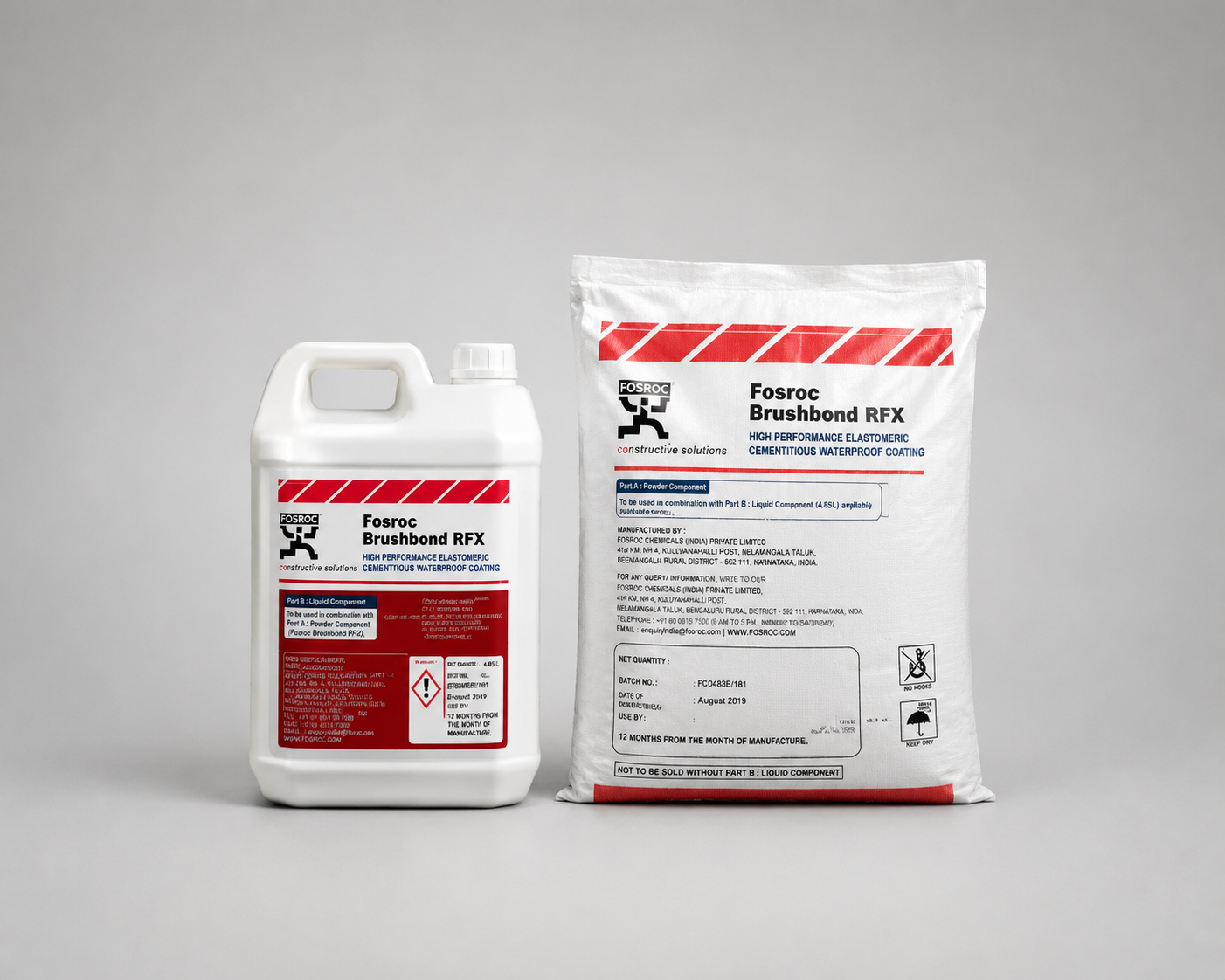
A complete range of bonding agents, repair mortars, grouts, chemical anchoring products, carbon-fibre strengthening systems and pressure-injection equipment for concrete repair, rehabilitation and structural upgrading.

  • Solutions for cracks, spalling and honeycombing
  • Bonding agents for old-to-new concrete work
  • Grouts and anchoring systems for machinery and bolts
  • Fischer & Hilti injection chemical anchors for rebar dowelling
  • Strengthening products for beams, slabs and columns
Product type, pack size and availability are confirmed with your quotation.
Bonding Repair mortar Grouting Anchoring CFRP
  • Complete repair range Bonding, patch repair, grouting, chemical anchoring and strengthening products
  • Requirement guidance Support based on defect type, substrate condition and repair objective
  • Project delivery Bulk and contractor supply across Kochi, Ernakulam and Thrissur
Now in stock

Rebar & chemical anchoring

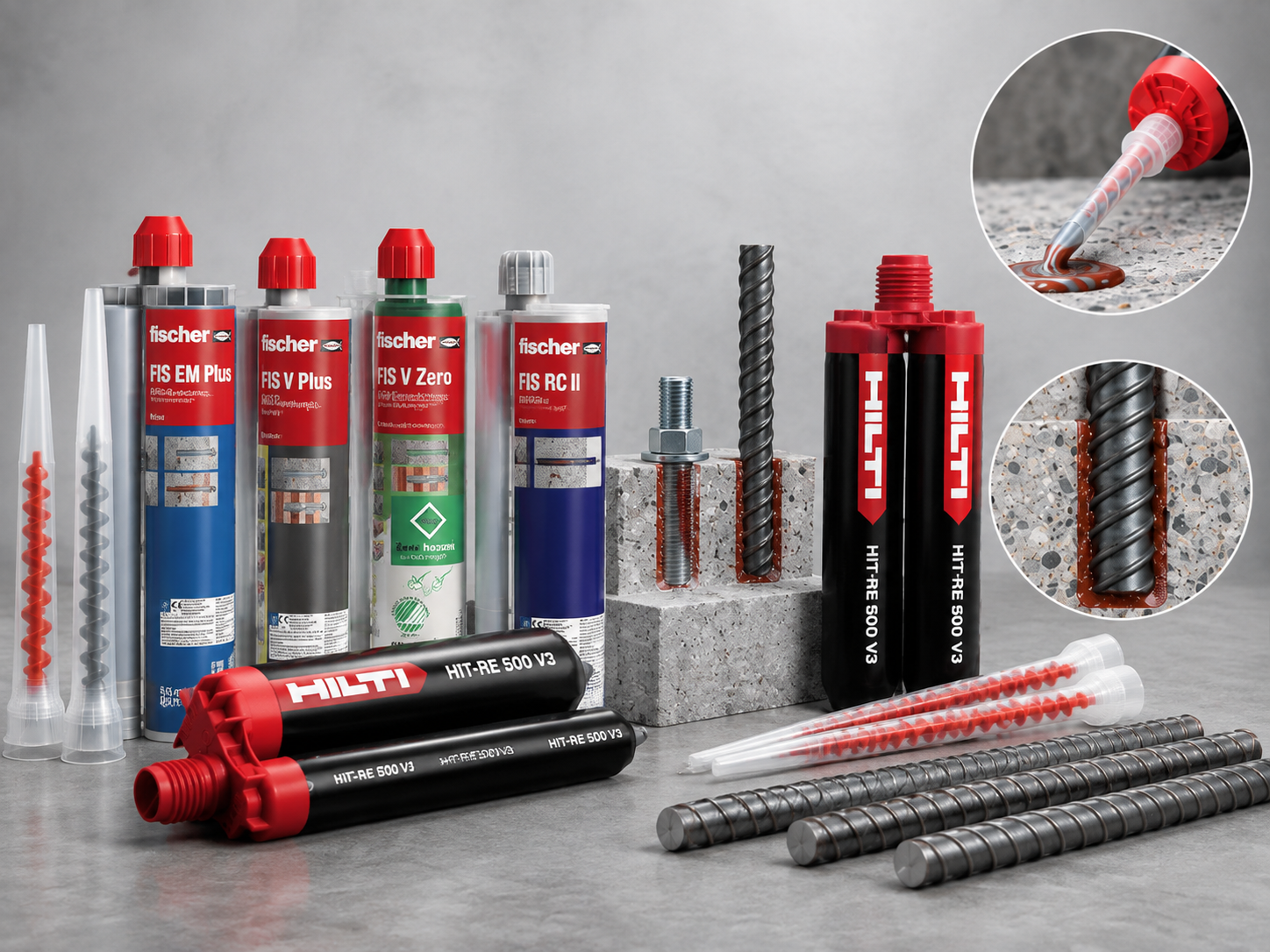
Injection-type chemical anchors in two specified brands, supplied alongside the grouting and structural-strengthening range on this page.

Chemical anchor — Fischer & Hilti Fischer and Hilti injection chemical anchor cartridges supplied by Anton Traders
Post-installed anchoring

Rebar / Chemical Anchor – Fischer & Hilti

Injection-type chemical anchor supplied in cartridges. Resin is injected into a drilled and cleaned hole and the bar or bolt is pushed in, bonding post-installed reinforcement into existing concrete along the full embedment — without the splitting forces an expansion anchor puts into the surrounding concrete.

  • Fischer
  • Hilti
  • Injection type
  • Rebar dowelling
  • Rebar dowelling into existing concrete for slab, beam and wall tie-ins
  • Also used for anchor bolts, dowels, starter bars and threaded rod
  • Suited to close edge distances and reduced spacing where expansion anchors are unsuitable
  • Hole cleaning before injection governs the bond — brushes and blow-out pumps supplied
  • Bar size, hole diameter and embedment depth follow the structural design
Technical overview

Typical specification

Product selection depends on defect type, crack width, repair depth, structural demand, reinforcement condition and project specification.

Bonding systems Epoxy, acrylic & SBR

Used for concrete-to-concrete and compatible plaster or mortar bonding.

Patch repair Repair mortars

Cementitious or resin-modified mortars for local concrete restoration and edge repair.

Void filling Non-shrink grouts

Flowable grouts for base plates, machine foundations, gaps and structural voids.

Anchoring Resin systems

Polyester, epoxy-acrylate and epoxy products for anchor bolts and reinforcement fixing, including Fischer and Hilti injection-type chemical anchors.

Chemical anchor Fischer & Hilti

Injection-type cartridges for post-installed rebar dowelling, bolts and threaded rod.

Rebar dowelling Post-installed bars

Drill, clean, inject from the base of the hole, then insert the bar and allow to cure.

Crack repair Injection resins

PU and epoxy injection materials for compatible structural and water-bearing cracks.

Strengthening Carbon-fibre systems

CFRP plates and fabrics used for designed structural strengthening applications.

Corrosion repair Rebar protection

Primers and repair systems for prepared, exposed and corroded reinforcement.

Anchor accessories Nozzles & brushes

Mixing nozzles, hole-cleaning brushes and blow-out pumps for correct installation.

Equipment Injection pumps

Manual and mechanical pumps, packers and accessories for pressure-grouting work.

Typical supply Kits, bags & pails

Pack size varies according to product chemistry and project requirement.

Selection tip: Share clear photos, defect dimensions, location, crack condition and any structural drawing before choosing the repair system. For anchoring, send the bar size, hole depth and edge distance from the design.

Where it is used

Common applications

Suitable for repair, rehabilitation, anchoring and strengthening of concrete and masonry structures.

01

Cracked beams

Repair and injection systems for compatible structural and non-structural cracks.

02

Spalled concrete

Removal, reinforcement treatment and reinstatement of damaged concrete cover.

03

Honeycombed areas

Repair mortars and grouts for voided and poorly compacted concrete zones.

04

Column strengthening

Designed strengthening systems for increased load or rehabilitation requirements.

05

Slab strengthening

CFRP and compatible systems for flexural strengthening of slabs.

06

Machine foundations

Non-shrink grouting under equipment, base plates and machinery.

07

Anchor bolt fixing

Resin anchoring of bolts, dowels and reinforcement into concrete.

08

Rebar dowelling

Post-installed starter bars chemically bonded into existing concrete.

09

New-to-old connections

Tying new slabs, beams, walls and staircases into an existing structure.

10

Fixture & railing anchoring

Threaded rod and bolt fixing for railings, brackets, canopies and cladding.

11

Retrofitting works

Repair and strengthening for altered loading or structural upgrading.

12

Leakage crack injection

Pressure injection for compatible water-bearing cracks and joints.

Restore structural performance

Why choose the right repair system?

Proper diagnosis and product selection help restore bond, durability, section geometry and structural performance while reducing repeat failures.

Discuss your requirement
01

Strong substrate bond

Bonding agents improve adhesion between prepared old and new materials.

02

Section restoration

Repair mortars rebuild damaged concrete cover and local geometry.

03

Void-free support

Grouts provide stable filling beneath base plates and equipment.

04

Reliable anchoring

Fischer and Hilti injection anchors bond bars along the full embedment depth.

05

Structural upgrading

Carbon-fibre systems add strength with limited weight and section increase.

06

Complete repair range

Products and equipment are available for multiple repair stages.

Customer feedback

Trusted for repair-product supply and support

4.9
★★★★★ Contractor-focused service
“The team reviewed the damaged area photos and helped us identify suitable repair materials.”
RN
Rahul Nair Civil contractor
“Good guidance for anchoring grout, repair mortar and reinforcement treatment.”
AM
Anoop Mathew Builder
“Quick quotation and proper coordination for the repair and grouting products.”
SK
Sajith Kumar Site engineer
Frequently asked questions

Before you place an order

How do I choose the correct concrete repair product?

Product selection depends on the defect type, repair depth, crack condition, substrate strength, reinforcement condition and structural requirement.

What is used for old-to-new concrete bonding?

Epoxy, acrylic or SBR-based bonding agents may be used depending on the application and project specification.

What is the difference between repair mortar and grout?

Repair mortar is generally used to rebuild damaged concrete sections. Grout is typically more flowable and used to fill gaps, voids or areas beneath base plates.

Do you supply Fischer and Hilti chemical anchors?

Yes. Injection-type chemical anchor cartridges are available in both brands, along with mixing nozzles, hole-cleaning brushes and blow-out pumps. Share the bar size and hole depth for the correct cartridge and quantity.

What is rebar dowelling or post-installed rebar?

It is the method of bonding a reinforcement bar into a hole drilled in existing concrete using an injection resin, instead of casting the bar in at the time of the original pour. It is commonly used to tie a new slab, beam, wall or staircase into an existing structure.

How is an injection chemical anchor installed?

Drill the hole to the specified diameter and depth, clean it thoroughly by brushing and blowing out the dust, inject the resin from the base of the hole outwards to avoid trapping air, insert the bar with a twisting motion, then leave it undisturbed for the full cure time. Incomplete hole cleaning is the most common cause of reduced anchor performance.

When is a chemical anchor better than a mechanical one?

A chemical anchor bonds along the full embedment rather than expanding against the hole wall, so it does not introduce splitting forces. That makes it suitable close to a concrete edge, at reduced spacing, and for post-installed reinforcement. Final selection is a design decision.

Can cracks be repaired by injection?

Compatible cracks may be injected using epoxy or polyurethane systems. The correct material depends on whether the crack is dry, structural or water-bearing.

What is carbon-fibre strengthening used for?

CFRP plates or fabrics are used in designed strengthening systems for beams, slabs, columns and other structural members.

Do you supply anchor-bolt fixing products?

Yes. Polyester, epoxy-acrylate and epoxy anchoring products may be supplied for bolts, dowels and reinforcement fixing.

Do you provide pressure-grouting equipment?

Manual and mechanical pumps, packers and compatible accessories may be supplied, subject to project requirement and availability.

Can damaged reinforcement be protected before repair?

Yes. Compatible rebar primers and corrosion-protection systems are available for properly prepared reinforcement.

Can you help estimate repair quantities?

Yes. Share photos, dimensions, repair depth and project location for an initial estimate. Structural repairs may still require consultant or engineer approval.

Is bulk delivery available?

Bulk and contractor supply is available across Kochi, Ernakulam, Thrissur and surrounding project locations, subject to stock and delivery planning.